
By Zara Jennings
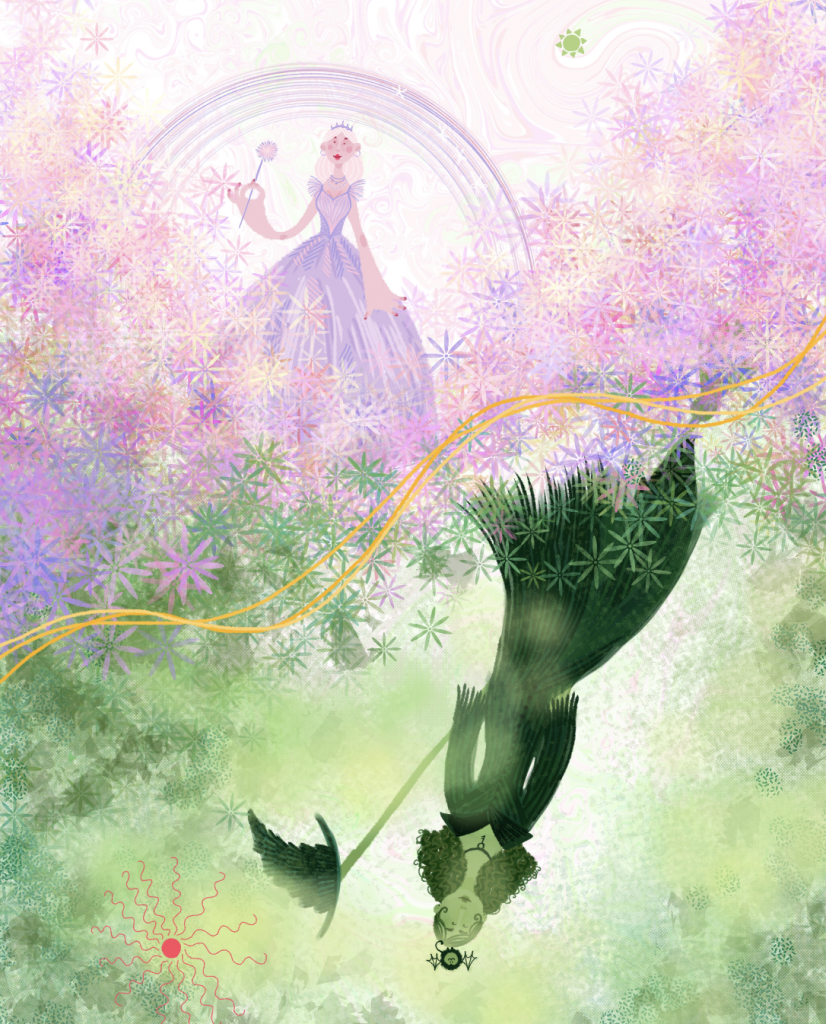
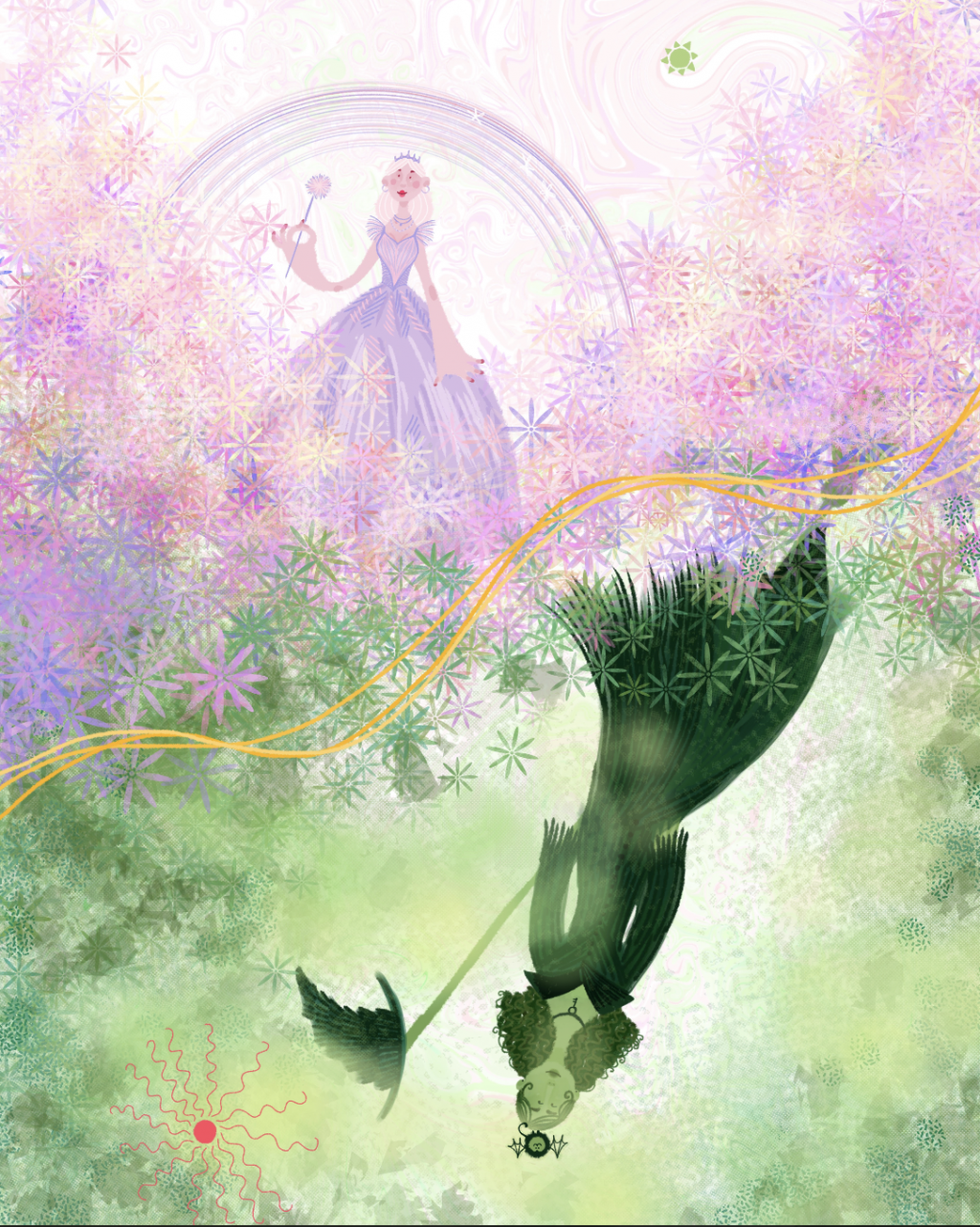
(Graphic by Natalie Hsiao)
Overall Rating: ★★★☆☆ (3/5 stars)
Upon its release in theaters this November, Wicked: For Good has stunned audiences with its music, messaging, and overall production. Fans have waited one year for the sequel to the first beloved film, starring Ariana Grande and Cynthia Erivo, and for most, it did not disappoint. It did not fail the box office either, grossing over $223 million globally.
Right from the start of the movie, the audience is whisked into the magical realm of Oz, galloping on the yellow brick road, which has begun construction. The familiar imagery of flying monkeys and Munchkinland evokes nostalgia for the first movie. But soon enough, the plot darkens at the celebration of Elphaba’s, or “The Wicked Witch of the West’s”, presumed death. The complexity of Glinda leading the ceremony out of political necessity foreshadows the myriad of events both heroines face.
An element that strengthens the overall production of the film is the purposeful cinematography. Almost everyone is familiar with the story of Dorothy, the brave little girl from Kansas who gets whisked away to Oz via a tornado. While she is included in the narrative, the actress’s face is never revealed on screen, a decision made to reinforce the importance of Elphaba and Glinda’s characters. Additionally, in a Variety interview, cinematographer Alice Brooks explains the importance of color in the film and the choices she made to represent each color of the rainbow in accordance with the story’s atmosphere.
While I believe Wicked was aesthetically and technically phenomenal, I have several critical opinions regarding the pacing, some of the songs, and the acting. While key plot points were executed well, the sequel’s pacing felt inconsistent– rushing through major narrative developments while lingering on emotional moments– especially in comparison to the more gradually structured first film. The music felt less iconic than “Defying Gravity”, “The Wizard and I”, and “Popular”, excluding the obviously beloved songs such as “No Good Deed”, and “For Good”. And as for the acting, while all actors delivered their roles well and respectably, a stellar quality that translated effortlessly through the screen in the first movie happened to miss the mark in this one. In particular, the lack of comedy Grande (or Glinda) was given, despite her natural talent for comedic delivery, hindered her role from shining through to the max.
Upon asking R.H.S. student Mia S. for her take on the movie, she commented on the emotional and musical aspects of the story. She remarked, “It made me cry a lot. I loved the music, and now many of the songs are on my playlist.” Mia’s opinion would not be far from the general public’s, as Wicked is already critically acclaimed for its dramatic storytelling through grand musical performance.
The most powerful part of Marc Platt’s production, without a doubt, is its thematic content, which stays with the viewer long after the experience ends. From friendship to desire, politics to propaganda, and the archetype of a hero versus a villain, Wicked explores the nuances of relationships and narratives. The emotional range, traversed through teary acting and F Major chords, is bound to change and inspire the film’s audience– and for good reason.
Works Cited
Tangcay, Jazz. “‘Wicked’ Cinematographer Alice Brooks on Shooting Emotional ‘For Good’ Sequence Using Torch Flames and Why the Hand-Holding Moment Tugs at Heartstrings.” Variety, 26 Nov. 2025, https://variety.com/2025/artisans/news/wicked-alice-brooks-for-good-scene-lighting-1236591567/.
Verifying. https://www.the-numbers.com/movie/Wicked-For-Good-(2025)#tab=summary. Accessed 21 Dec. 2025.